Magic Rings
The Last BattleThe Magic Rings are the buried objects that once carried Digory and Polly into Narnia and, generations later, become the children’s hoped-for route back. Peter and Edmund recover them from a London garden, but Eustace and Jill never see or use them: Aslan brings them to Narnia without their help. The Rings thus connect the world’s beginnings to its final crisis while making clear that the children’s return does not depend on possessing them.
Origin and Earlier Use
Eustace explains that Digory and Polly had come into Narnia at the very beginning, on the day the animals learned to talk. Their journey had been made by means of the Magic Rings, long before the younger children were born. When Tirian recognizes them as the Lord Digory and Lady Polly, he is astonished that they are still alive in their own world; the Rings belong to a history that reaches back to Narnia’s first days, not merely to the present emergency.
That earlier use supplies the practical precedent for the children’s plan. After Tirian appears to them and then vanishes, Eustace says the group became certain that something was happening in Narnia. They could not cross over simply by wishing to, so they talked through possible means until the Professor concluded that only the Magic Rings would serve. The objects are presented as a known passage between worlds, but access to them is not straightforward.
Recovery and the Journey That Bypasses Them
The Rings had been buried in the garden of a house in London, and the house had since been sold. Peter and Edmund went to the city early in the morning and entered the garden from the back, disguised as workmen so that anyone who saw them might think they had come to work on the drains. Peter later sent a wire to report that he had obtained the Rings. Their recovery appears to complete the plan just before Eustace and Jill are due to return to school.
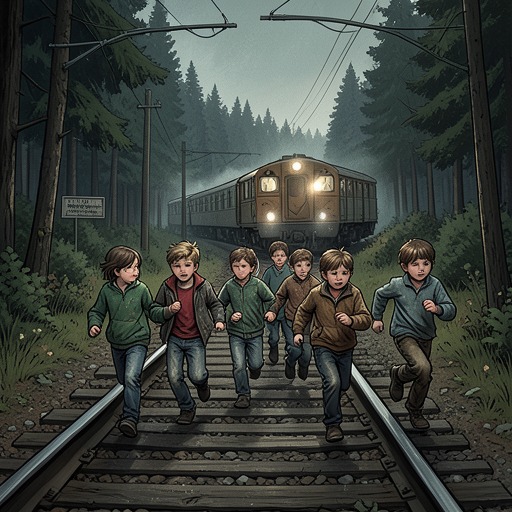
The intended handover is arranged for a place on the way to school. Peter and Edmund are to meet Eustace and Jill there and give them the Rings; the younger pair must make the journey because the older children cannot return to Narnia. The Professor, Polly, and Lucy travel with them, hoping to stay together as long as possible. But as the train nears the station where the meeting is to take place, a violent jerk and noise interrupt the plan. Eustace and Jill find themselves in Narnia, with Tirian tied to a tree, before they have received the Rings.
Tirian asks directly whether they used them. Eustace answers that they never even saw the Rings and that Aslan had done everything for them in his own way. The distinction is decisive: recovering the objects and arranging their transfer do not cause the crossing. The Rings are a real and historically proven means, but this return takes place without them.
Possession, Limits, and Aslan’s Authority
After learning that the Rings remain with Peter, Tirian asks whether he can use them. Jill says they do not think he can. She recalls that Aslan had told Edmund and Lucy, on their last visit, that they would never come to Narnia again, and had said something similar to Peter even earlier. Peter would come eagerly if he were allowed, but the existence of the Rings does not reverse that limit. Possession is not the same as permission, and access between worlds is not a power the children can exercise at will.
The Rings therefore stand beside, rather than above, Aslan’s agency. The children’s plan depends on retrieval, timing, and a handover; the actual crossing arrives through an event they neither arrange nor foresee. Later, at the Door, Aslan raises his head and roars, first that the time has come, then simply, “Time.” The Door opens. The novel’s culminating passage again locates the decisive transition in Aslan’s action, not in the Rings: he calls the stars home, judges the creatures who approach him, and orders the end of the old world. The Ring journey and the final passage are distinct episodes, but together they frame movement between worlds as something the objects can facilitate without controlling.
Meaning in the Ending
The Rings’ role is shaped by a contrast between human preparation and a larger order. The children do not neglect practical means: the older boys undertake a risky garden visit, and the group coordinates a meeting around a school journey. Yet the plan is overtaken before its central object reaches the children. The Rings are neither exposed as false nor destroyed; rather, this story’s return renders their intended use unnecessary. Their earlier efficacy remains part of Narnia’s history, while their present failure to figure in the crossing prevents them from becoming a mechanism that can compel it.
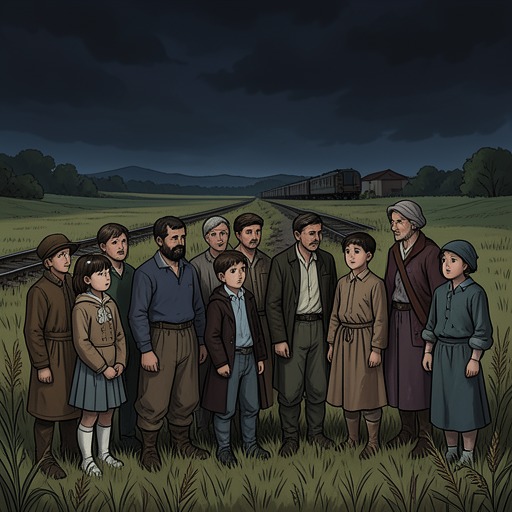
At the end, Aslan tells the children that a real railway accident has occurred and that they, along with their parents, are dead in the Shadow-Lands. He describes the end of their former life as the beginning of the real story, whose chapters continue beyond what anyone on earth has read. This final revelation makes the Rings’ limits especially clear. They had offered a route from one world to another, and their recovery had seemed to promise a return; but the children’s final passage is not another expedition enabled by a device. It belongs to the transition Aslan makes possible, beyond the reach of a plan built around the Rings.